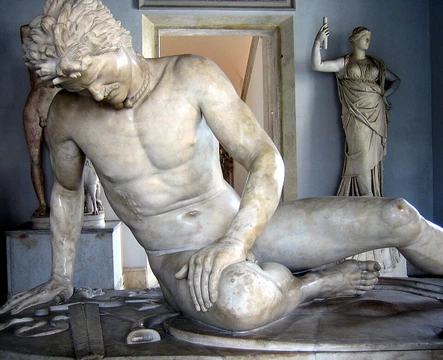
Elgin Marbles
Ancient Greek sculptures from the Parthenon, now in the British Museum.
The Elgin Marbles are a collection of Ancient Greek sculptures removed from the Parthenon and other structures on the Acropolis of Athens in the early 19th century by agents of Thomas Bruce, 7th Earl of Elgin, and now held in the British Museum in London. The majority were created in the 5th century BC under the direction of sculptor and architect Phidias. Their acquisition and continued presence in Britain have been the subject of longstanding international controversy, with Greece formally requesting their return since 1983.
- field
- Ancient Greek sculpture
- nationality
- Greek (origin); British (current location)
- known_for
- Parthenon sculptures removed by Lord Elgin; subject of restitution dispute
- created
- 5th century BC
- removed
- 1801–1812
Lore & Background
The Parthenon was built on the Acropolis of Athens from 447 BCE as a temple to Athena, with sculptural design likely by Phidias. In 1687, during the Sixth Ottoman–Venetian War, a Venetian artillery round ignited gunpowder stored in the Parthenon, causing an explosion that destroyed much of the structure and damaged about three-fifths of the frieze sculptures. For the next century and a half, portions were scavenged for building material.
Reader's Guide
The Elgin Marbles represent over half of the surviving sculptural decoration of the Parthenon, including figures from pediments, metope panels, and frieze sections. Their removal by Lord Elgin between 1801 and 1812, under a disputed firman from Ottoman officials, has fueled a debate over legality and ethics. A British parliamentary inquiry in 1816 deemed the acquisition legal, leading to their purchase by the government and transfer to the British Museum. Greece has since argued for their return, citing cultural importance and the desire for unified display in the Acropolis Museum. The British Museum counters that the marbles were legally obtained and that their return could set a precedent affecting other museum collections. UNESCO has called for resolution at the intergovernmental level, and discussions continue.
Did You Know?
- The Elgin Marbles are named after Thomas Bruce, 7th Earl of Elgin, who oversaw their removal from 1801 to 1812.
- About half the surviving Parthenon sculptures were removed by Elgin's agents, along with pieces from the Erechtheion, Temple of Athena Nike, and Propylaia.
- A British parliamentary inquiry in 1816 concluded that Elgin had acquired the marbles legally, though the legality has been disputed.
- In 2021, UNESCO called upon the British government to resolve the dispute at the intergovernmental level.
More in Sculpture 1-24
Spotted an error? Know more?
This is a living reference — every entry is fact-audited, and reader corrections feed straight into our audit queue. Suggest an edit · See this site's audit record